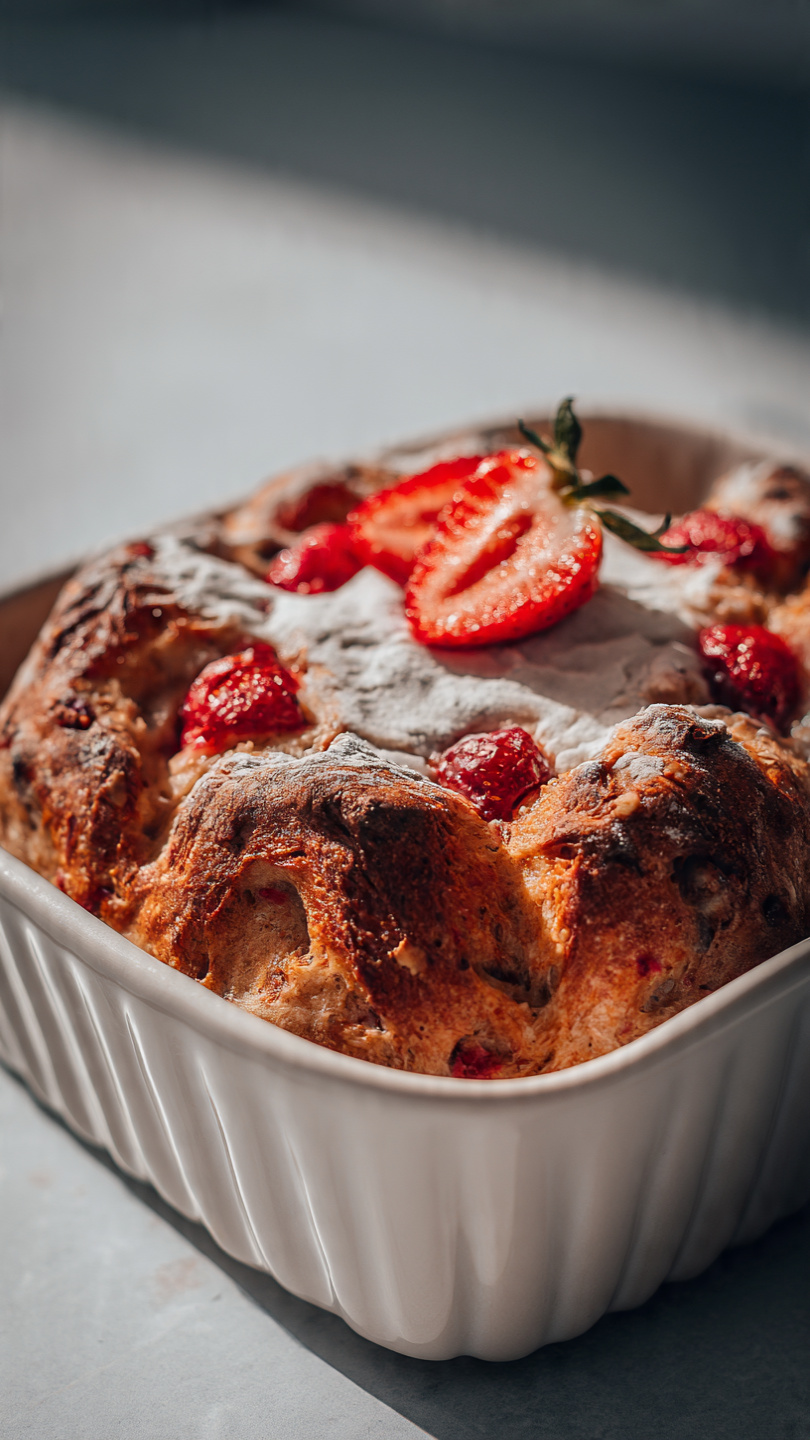
Strawberry Sourdough Bread (Pink Swirl Loaf)
This stunning Strawberry Sourdough Bread swirls real strawberry puree through a tangy, chewy homemade loaf for a naturally pink crumb that is as beautiful as it is delicious.

The Pink Sourdough Loaf You Will Want to Bake Every Strawberry Season
If you have been scrolling through different sourdough bread recipes looking for something that genuinely stops people in their tracks, this Strawberry Sourdough Bread is it. The moment you slice into this loaf and reveal that naturally rosy, blush-pink crumb, you will understand why bakers everywhere are obsessed with sweet sourdough loaves that are as visually striking as they are satisfying to eat.
This is not a gimmick loaf. The strawberry flavor is real, woven into every bite through a combination of fresh strawberry puree worked directly into the dough and (if you want a deeper color) a boost of freeze-dried strawberry powder. The result is a loaf with the signature tang and chewy crumb of a classic sourdough, layered with a gentle fruity sweetness that makes it absolutely irresistible toasted with butter, served alongside a cheese board, or eaten straight off the cutting board.
Before you dive in, a note on ingredients and equipment. Sourdough baking rewards quality, and this recipe is no exception. A well-maintained, active starter is the single most important factor in getting good oven spring and an open crumb. For the strawberry flavor, fresh summer berries are wonderful, but freeze-dried strawberry powder is the secret weapon for a deeply saturated pink sourdough loaf that holds its color after baking.
What Makes This Strawberry Sourdough Special
There are a few things that set this recipe apart from other sourdough bread combinations you might have tried.
- Real fruit, not extract. Fresh strawberry puree replaces a portion of the water in the dough, so the flavor is genuine and bright.
- A cold retard for better flavor and scoring. An overnight rest in the refrigerator slows fermentation, which deepens the tangy complexity and makes the dough firm enough to score cleanly with a beautiful bread design.
- Flexible sweetness. A tablespoon of honey is optional but rounds out the berry flavor nicely without tipping this into dessert territory.
- Naturally pink, naturally gorgeous. No food dye. No artificial color. Just strawberries doing what strawberries do best.
Baker's Note: Strawberry puree adds natural sugar to the dough, which means it can brown faster in the oven than a plain sourdough. Keep an eye on the crust after you remove the Dutch oven lid, and tent the loaf loosely with foil if it is darkening too quickly before the interior is fully baked.
Tips for the Best Pink Sourdough Loaf
If this is your first time working with fruit-enriched sourdough flavours, here are a few things worth keeping in mind before you start.
Use a starter at peak activity. Your starter should be bubbly, domed, and at least doubled in size since its last feeding. A sluggish starter will produce a dense loaf no matter how beautiful the color is.
Do not skip the sieve. Blending and straining the strawberries removes seeds and fibrous bits that can weaken the gluten structure. A smooth puree incorporates much more evenly.
Embrace the cold retard. The overnight refrigerator rest is not just for convenience. It genuinely improves the flavor of this loaf and makes it far easier to score a clean, expressive bread design on the surface before baking.
Manage your hydration. Fruit purees introduce variable moisture. If your dough feels extremely slack after the autolyse, hold back 1 to 2 tablespoons of the warm water during the initial mix.
What Can I Make With Sourdough Bread Like This?
Once you have baked this loaf, the serving possibilities are genuinely exciting. A slice of this pink sourdough toast topped with whipped ricotta and fresh strawberries is a breakfast worth waking up for. It pairs beautifully with soft brie or a tangy goat cheese on a sourdough bouquet-style charcuterie spread. It also makes a surprisingly wonderful base for a strawberry jam and mascarpone open-faced sandwich, or simply enjoy it warm with good salted butter.
This loaf is also a showstopper at brunches, baby showers, and spring gatherings. The naturally pink crumb sparks genuine conversation every single time.
Ready to bake your own stunning pink loaf? Here is the full step-by-step recipe:
Strawberry Sourdough Bread (Pink Swirl Loaf)
This stunning Strawberry Sourdough Bread swirls real strawberry puree through a tangy, chewy homemade loaf for a naturally pink crumb that is as beautiful as it is delicious.
Ingredients
- 3 1/2 cups bread flour, plus extra for dusting
- 3/4 cup active sourdough starter, fed and bubbly, at peak activity
- 1 cup fresh strawberries, hulled, blended into a smooth puree
- 1/2 cup warm water, about 80 degrees F
- 1 1/2 tsp fine sea salt
- 1 tbsp honey, optional, enhances natural sweetness
- 2 tbsp freeze-dried strawberry powder, intensifies color and flavor; optional but highly recommended
Instruction
Blend the fresh strawberries until completely smooth. Strain through a fine mesh sieve if you prefer a seedless puree. Measure out 120 ml (0.5 cup) and set aside. Reserve any extra for another use.
In a large mixing bowl, combine the sourdough starter, warm water, strawberry puree, and honey. Stir until evenly mixed.
Add the bread flour and salt. Mix with your hand or a dough scraper until no dry flour remains. The dough will feel slightly sticky and have a light pink hue. Cover the bowl and let it rest for 30 minutes (autolyse).
Perform 4 rounds of stretch-and-fold every 30 minutes over the next 2 hours. To do a set, grab one side of the dough, stretch it up, and fold it over the center. Rotate the bowl 90 degrees and repeat 4 times per round.
If using freeze-dried strawberry powder, sprinkle it over the dough during the second stretch-and-fold and incorporate it fully. This deepens the pink color beautifully.
After the final fold, cover the bowl and allow the dough to bulk ferment at room temperature (70 to 75 degrees F) for 4 to 6 more hours, until it has grown by 50 to 75 percent and looks bubbly and domed.
Turn the dough out onto a lightly floured surface. Gently pre-shape it into a round by folding the edges toward the center. Let it rest, seam-side down, for 20 minutes uncovered.
Final-shape the loaf: flip the dough over, stretch it into a rough rectangle, then roll it tightly into a batard or round boule. Place it seam-side up in a floured banneton or a bowl lined with a well-floured kitchen towel.
Cover loosely and refrigerate overnight (8 to 16 hours) for a cold retard. This slows fermentation, deepens flavor, and makes scoring much easier.
When ready to bake, place a Dutch oven in the oven and preheat to 500 degrees F (260 degrees C) for at least 45 minutes.
Turn the cold dough out onto a piece of parchment paper. Score the top with a sharp lame or razor blade using your preferred design. A simple arc or leaf pattern shows off the pink crumb beautifully.
Carefully lower the loaf (on the parchment) into the screaming-hot Dutch oven. Cover with the lid and bake for 20 minutes.
Remove the lid and reduce the oven temperature to 450 degrees F (230 degrees C). Continue baking for 20 to 25 minutes until the crust is deep golden brown.
Transfer the loaf to a wire rack and resist cutting it for at least 1 hour. The interior is still setting as it cools. Slice to reveal the stunning pink crumb inside.
Equipment
- Large mixing bowl
- Fine mesh sieve
- Blender or food processor
- Banneton proofing basket (or a bowl lined with a floured towel)
- Dutch oven (5 qt or larger)
- Bench scraper
- Lame or sharp razor blade
- Parchment paper
- Wire cooling rack
- Kitchen scale
Notes
Serving, Storing, and Sharing
This strawberry sourdough bread is at its absolute best in the first 24 hours after baking, when the crust is crisp and the crumb is soft and springy. After that, slice and toast it to bring it back to life.
For storage, wrap the cut loaf in beeswax wrap or a clean kitchen towel at room temperature for up to 2 days. Refrigerate for up to 5 days, or slice the whole loaf and freeze for up to 3 months. Toasting slices from frozen works perfectly.
If you bake this and share it with someone who has never tried sweet sourdough loaves before, be warned: you will be asked to make it again very soon. This is one of those bread recipes with a design and a flavor combination that people simply do not forget.