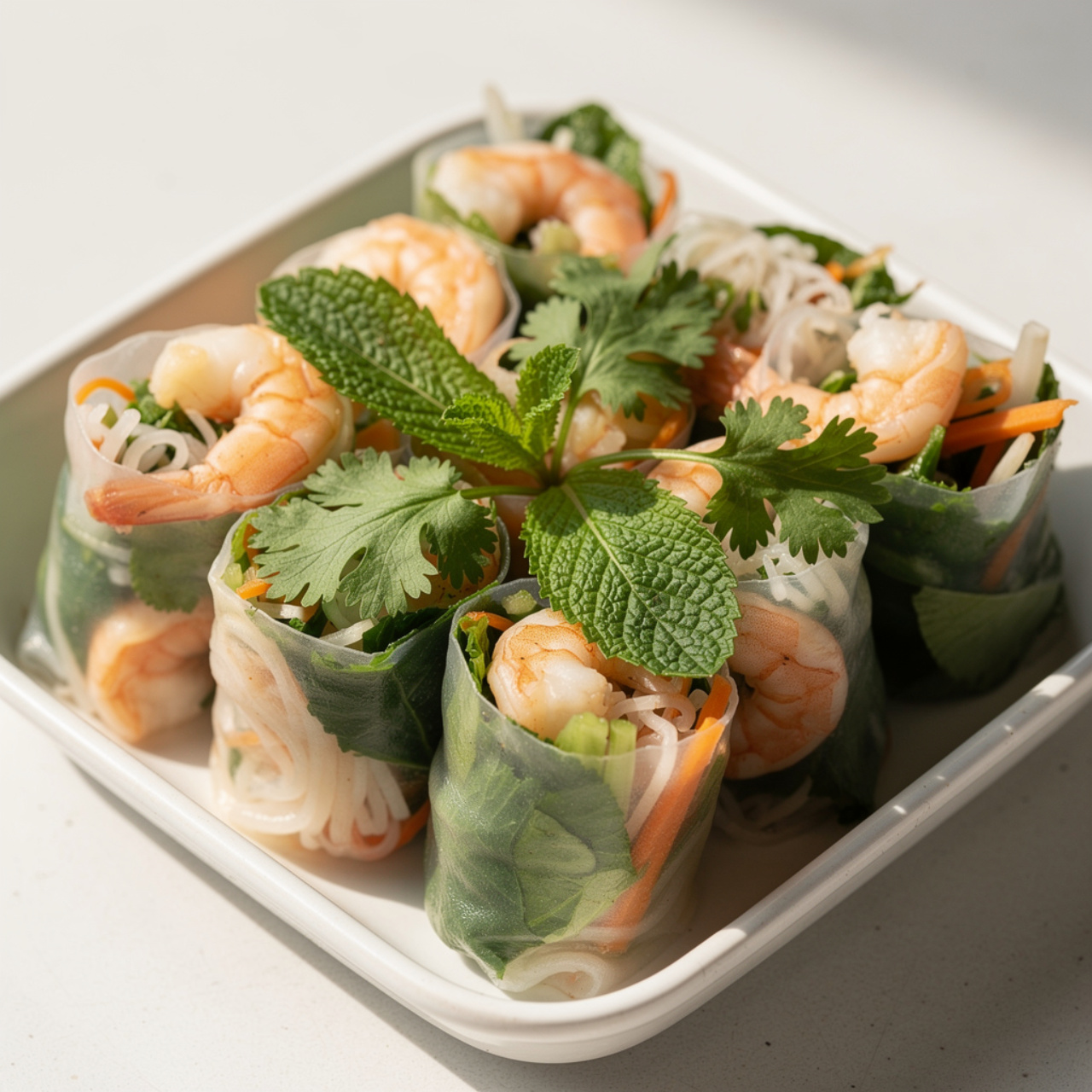
Vietnamese Summer Rolls (Fresh, Light, and Totally Irresistible)
These Vietnamese Summer Rolls are fresh, vibrant, and packed with shrimp, vermicelli, crisp vegetables, and fragrant herbs, all wrapped in delicate rice paper and served with a killer peanut dipping sauce.

The Fresh, No-Cook Appetizer That Everyone Asks For
If you have ever sat down at a Vietnamese restaurant and watched a plate of summer rolls arrive at the table, you already know the feeling: cool, translucent parcels stuffed with colorful vegetables, plump shrimp, silky noodles, and a cloud of fresh herbs, all waiting for a generous dunk into a rich peanut sauce. This Vietnamese Summer Roll recipe brings all of that straight to your kitchen, and the best part is that there is almost zero cooking involved.
Whether you are hunting for rice paper roll recipes for a dinner party starter, need a light lunch that actually satisfies, or simply want to know how to make shrimp rice paper rolls that look as good as they taste, you have landed in the right place. These are bright, fresh, endlessly customizable, and genuinely one of the most crowd-pleasing things you can put on a table.
Why You'll Love This Summer Roll Recipe
There are a lot of reasons this recipe stays in permanent rotation:
- No oven, no stove (almost). Beyond quickly cooking the shrimp and soaking the noodles, this is a fully cold-kitchen recipe. Perfect for hot days.
- Incredibly versatile. Swap the shrimp for tofu, chicken, or mango. Skip a vegetable, add another. These rice paper wraps recipes are forgiving by nature.
- Great for groups. Set out all the fillings in little bowls and let everyone roll their own. It turns dinner into an activity.
- Light but genuinely filling. The combination of protein, fiber-rich vegetables, and noodles means you feel satisfied, not stuffed.
Chef's Tip: The secret to a beautiful summer roll is mise en place. Have every single filling prepped, cooled, and laid out before you touch the water for the rice paper. Once that wrapper hits the water, you need to move with intention.
The Ingredients That Make the Difference
Getting the right rice paper wrappers is probably the single biggest factor in whether your rolls come together beautifully or fall apart in frustration. Look for 22cm round rice paper sheets at any Asian grocery store. The Banh Trang brand is widely trusted and easy to find. For the peanut sauce, a good-quality natural peanut butter with no added sugar makes the flavors cleaner and more balanced.
Having a sharp julienne peeler or a simple mandoline on hand makes prepping your carrots and cucumbers incredibly fast and gives you those elegant, uniform matchstick cuts that make every roll look professionally made.
How To Make Shrimp Rice Paper Rolls: The Technique
If you have tried Asian rolls before and ended up with torn wrappers or soggy fillings, do not give up. The technique clicks after your second or third roll, and from there it becomes almost meditative.
The Rice Paper Trick
The biggest mistake people make with rice roll recipes is over-soaking the wrapper. You want the rice paper to be pliable but still slightly stiff when it comes out of the water. Think of it like cooking pasta: al dente, not mushy. The heat and moisture from the fillings will continue softening the wrapper as you roll, so if it feels perfectly soft in the water, it will be a soggy, sticky mess by the time you finish.
Soak for 10 to 15 seconds in warm (not boiling) water, lay it flat on a damp kitchen towel, and work quickly.
Building the Roll
Think of the wrapper in thirds. The bottom third is where your main fillings go: lettuce, noodles, vegetables, herbs. The top third is where you place the shrimp cut-side down so they peek through the translucent wrapper beautifully. Leave the middle third as a buffer.
Fold the bottom up, tuck in the sides snugly (like a burrito), and roll forward toward the shrimp. The rice paper seals itself naturally.
Chef's Tip: If a roll tears, do not panic. Just grab a second piece of soaked rice paper and wrap the torn roll inside it. Double-wrapped rolls are actually slightly sturdier and still look great.
The Peanut Dipping Sauce
Let's be honest: the sauce is what people remember. This one is a simple mix of peanut butter, hoisin, lime juice, soy sauce, and garlic, thinned to a silky consistency with a splash of warm water. It is savory, slightly sweet, nutty, and just a little tangy. It comes together in two minutes and somehow makes everything taste better.
For something brighter and more acidic, a classic Vietnamese nuoc cham (fish sauce, lime, garlic, sugar, water, and fresh chili) is a wonderful alternative and a more traditional pairing.
Ready to roll? Here is everything you need, laid out step by step:
Vietnamese Summer Rolls (Fresh, Light, and Totally Irresistible)
These Vietnamese Summer Rolls are fresh, vibrant, and packed with shrimp, vermicelli, crisp vegetables, and fragrant herbs, all wrapped in delicate rice paper and served with a killer peanut dipping sauce.
Ingredients
- 12 rice paper wrappers, 22cm round, banh trang brand preferred
- 3/4 lb large shrimp, peeled, deveined, cooked and halved lengthwise
- 4 oz rice vermicelli noodles, cooked and cooled per package directions
- 12 butter lettuce leaves, torn to fit wrapper
- 1 large carrot, peeled and julienned
- 1/2 English cucumber, seeds removed, julienned
- 1 ripe avocado, sliced thin
- 1/2 cup fresh mint leaves, loosely packed
- 1/2 cup fresh cilantro, loosely packed
- 1/4 cup fresh Thai basil, optional but highly recommended
- 3 tbsp creamy peanut butter, for dipping sauce
- 2 tbsp hoisin sauce, for dipping sauce
- 1 tbsp fresh lime juice, for dipping sauce
- 1 tsp soy sauce, low sodium preferred, for dipping sauce
- 2 tbsp warm water, to thin dipping sauce to desired consistency
- 1 garlic clove, finely grated, for dipping sauce
- 1/4 tsp crushed red pepper flakes, optional, for dipping sauce
Instruction
Cook the shrimp: Bring a small pot of salted water to a boil. Add the shrimp and cook for 2 to 3 minutes until pink and just cooked through. Drain, let cool, then slice each shrimp in half lengthwise. Set aside.
Cook the noodles: Prepare the rice vermicelli according to package directions (usually a 3 to 5 minute soak in boiling water). Drain, rinse under cold water, and set aside.
Make the dipping sauce: In a small bowl, whisk together the peanut butter, hoisin sauce, lime juice, soy sauce, grated garlic, and warm water until smooth and creamy. Taste and adjust with more lime juice or water as needed. Stir in red pepper flakes if using. Set aside.
Prep your workspace: Lay all your fillings out on the counter in small bowls or clusters so everything is within easy reach. Fill a large shallow dish or pie plate with warm water.
Soften the rice paper: Submerge one rice paper wrapper in the warm water for 10 to 15 seconds, just until it turns pliable and slightly tacky but not completely soft. It will continue softening as you work. Lay it flat on a clean, damp kitchen towel or cutting board.
Layer your fillings: In the lower third of the wrapper, layer a piece of lettuce, a small pinch of vermicelli noodles, a few strips of carrot and cucumber, 2 to 3 slices of avocado, and a few fresh herb leaves. Do not overfill.
Add the shrimp: Place 3 to 4 shrimp halves, cut side down, across the top third of the wrapper so they show through the finished roll.
Roll it up: Fold the bottom edge up over the filling, fold in both sides snugly, then roll forward tightly but gently toward the shrimp end. The rice paper will seal itself. Repeat with remaining wrappers and fillings.
Serve immediately: Arrange the rolls on a platter, cut in half on the diagonal if desired, and serve with the peanut dipping sauce on the side.
Equipment
- Large shallow dish or pie plate (for soaking rice paper)
- Small saucepot
- Cutting board
- Sharp chef's knife
- Julienne peeler or mandoline
- Small mixing bowl (for dipping sauce)
- Whisk or fork
- Clean damp kitchen towel or silicone mat
Notes
Serving, Storing, and Making It Your Own
Serving: Arrange the rolls on a platter, cut them in half diagonally if you like, and serve immediately with the peanut sauce. A sprinkle of crushed peanuts and a wedge of lime on the side never hurts.
Variations worth trying:
- Mango summer rolls: Add thin strips of ripe mango alongside the avocado for a sweet, tropical flavor.
- Vegetarian rice paper wraps: Replace shrimp with crispy baked tofu marinated in soy sauce and sesame oil.
- Spicy version: Add a few slices of fresh jalapeño inside the roll or stir sriracha into the peanut sauce.
For parties: Set up a summer roll bar. Prep all the fillings and let guests build their own. It is interactive, endlessly adaptable for dietary preferences, and people absolutely love it.
However you make them, these fresh, vibrant rolls are the kind of recipe that earns a permanent spot in your rotation. Once you know what to make with rice paper rolls, you will find excuses to make them on repeat.