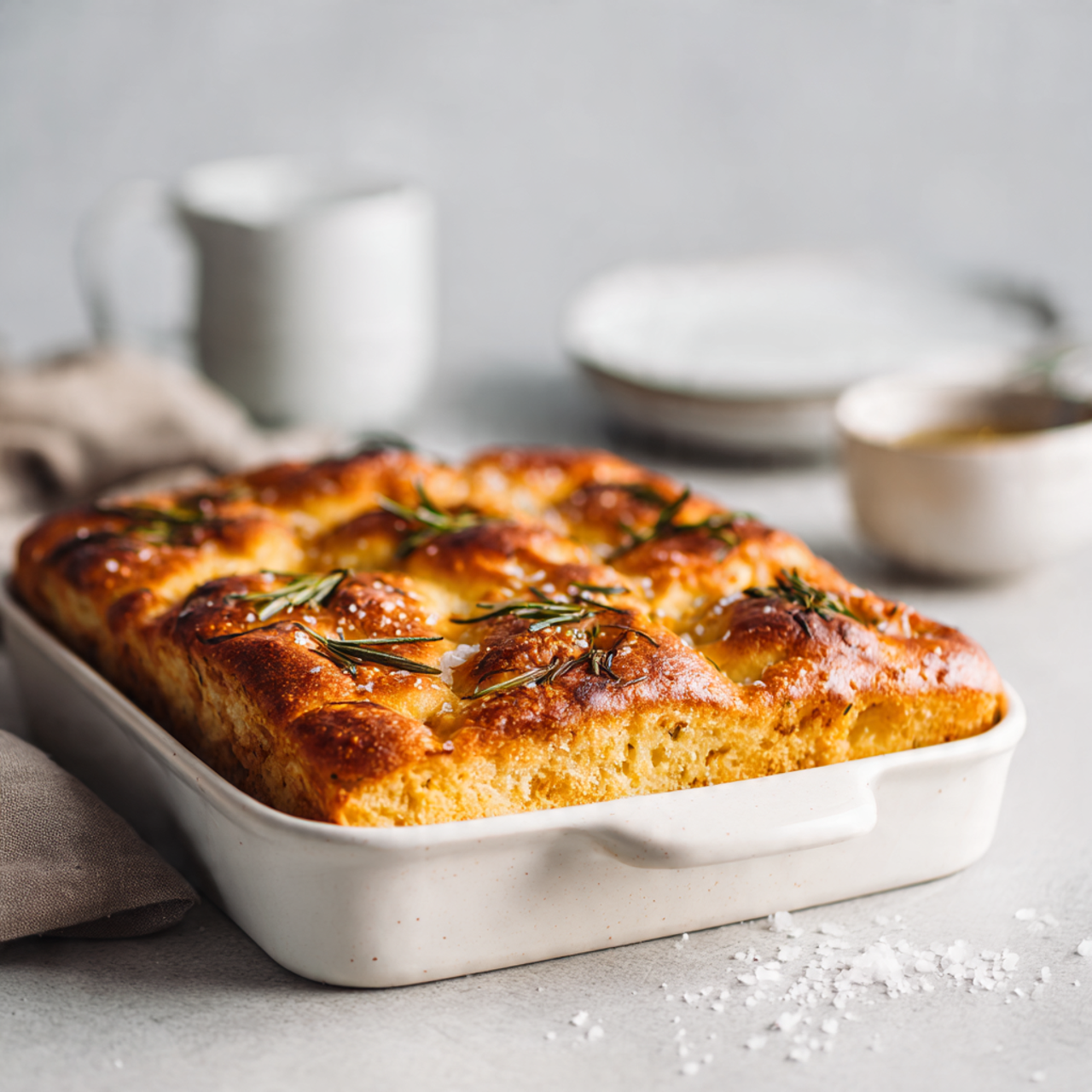
Sourdough Focaccia Bread Recipe (Crispy, Chewy, and Irresistible)
This sourdough focaccia bread recipe delivers a golden, crispy crust with a pillowy, chewy interior using your active sourdough starter. It's one of the easiest baked bread recipes you'll ever make, and the flavor is absolutely unbeatable.

The Sourdough Focaccia You Have Been Waiting to Bake
If you have been holding onto a bubbly, active sourdough starter and wondering what to bake next, this sourdough focaccia bread recipe is your answer. It has everything you love about classic focaccia, a shatteringly crispy golden bottom, a pillowy soft and chewy interior, those iconic deep dimples pooling with olive oil and fragrant rosemary, and it gets all of that incredible depth of flavor from your starter instead of commercial yeast.
The best part? This is genuinely one of the easiest baked bread recipes out there. There is no kneading, no shaping anxiety, and no special equipment required. You mix, you wait, you dimple, and you bake. The sourdough fermentation does the heavy lifting while you go about your day.
Why This Recipe Works (and Why Sourdough Makes It Better)
Traditional quick focaccia bread recipes rely on commercial yeast for a fast rise, which is great when you need focaccia bread quick. But when you use a mature sourdough starter, something special happens. The long, slow fermentation breaks down the flour more thoroughly, creating a more complex, tangy flavor and a texture that is noticeably lighter and more open than yeast-only versions.
The olive oil is the other hero here. It is not just drizzled on top for looks. A generous coating in the pan and on the dough creates that signature crispy, almost fried bottom crust that makes focaccia so addictive. Do not hold back on it.
Chef's Tip: Use the best extra virgin olive oil you own for this recipe. Since the oil is front and center in every bite, its flavor matters more than in almost any other baked bread recipe. A fruity, peppery olive oil will make this focaccia taste like it came from a Roman bakery.
Tools and Ingredients Worth Getting Right
For easy focaccia bread recipes like this one, the pan you choose makes a real difference. A metal 9x13 inch baking pan conducts heat more efficiently than glass or ceramic, giving you that deeply golden, crispy bottom crust every single time. The quality of your olive oil and flaky finishing salt also elevates this from good to genuinely memorable.
How to Get the Perfect Dimples (and Why They Matter)
The dimpling step is not just decorative. Pressing your fingers deep into the risen dough creates pockets that catch olive oil, salt, and toppings, and it also releases some of the larger gas bubbles to create a more even, uniform crumb. Here is how to do it right:
- Oil your fingers generously before dimpling so the dough does not stick to you.
- Press all the way to the bottom of the pan without tearing through. You want deep, confident dimples, not timid pokes.
- Work quickly and evenly across the entire surface so the dough bakes uniformly.
- If the dough springs back stubbornly, let it rest uncovered for 10 minutes and try again. The gluten just needs a moment to relax.
Topping Ideas Beyond Rosemary and Garlic
Rosemary and garlic is a classic for good reason, but focaccia is one of the most versatile fast focaccia bread recipes you can have in your rotation. Once you have the base down, the toppings are endlessly adaptable:
- Cherry tomatoes and fresh basil pressed into the dimples before baking
- Caramelized onions and gorgonzola for a richer, more savory version
- Olives and sun-dried tomatoes for a deeply Mediterranean flavor profile
- Sliced grapes, walnuts, and a drizzle of honey for a stunning sweet and savory appetizer
- Simply flaky salt and olive oil for the purest, most traditional focaccia experience
Chef's Tip: Add delicate toppings like fresh herbs or cheese in the last 5 minutes of baking to prevent burning. Heartier toppings like sliced garlic, olives, and tomatoes can go on before the bread enters the oven.
Timing Your Sourdough Focaccia
This is one of those easy focaccia bread recipes that fits beautifully into a real life schedule. Mix the dough in the evening before bed, let it ferment overnight on your counter, and by late morning the next day you can have warm, golden focaccia on your table. Here is a simple timeline:
- 8:00 PM: Mix and cover the dough
- 8:00 AM (next morning): Transfer to the oiled pan, stretch, and rest
- 9:00 AM: Dimple, top, and bake
- 9:30 AM: Eat the best focaccia of your life
For an even more hands-off approach, after the bulk ferment you can place the dough in the oiled pan, cover it tightly, and refrigerate it overnight. Pull it out about an hour before you want to bake to let it come back to room temperature and finish its rise before dimpling.
Ready to bake? Here is the full step-by-step recipe:
Sourdough Focaccia Bread Recipe (Crispy, Chewy, and Irresistible)
This sourdough focaccia bread recipe delivers a golden, crispy crust with a pillowy, chewy interior using your active sourdough starter. It's one of the easiest baked bread recipes you'll ever make, and the flavor is absolutely unbeatable.
Ingredients
- 1 cup active sourdough starter, fed and bubbly, at peak activity
- 1 cup warm water, around 90 degrees F
- 2 1/2 cups bread flour, all-purpose flour works as a substitute
- 1 1/2 tsp fine sea salt
- 5 tbsp extra virgin olive oil, divided, use a good quality oil for best flavor
- 1 tsp flaky sea salt, for topping, Maldon or fleur de sel recommended
- 3 fresh rosemary sprigs, leaves stripped, or substitute 1 tsp dried rosemary
- 3 garlic cloves, thinly sliced, optional but highly recommended
Instruction
In a large mixing bowl, combine the active sourdough starter and warm water. Whisk together until fully combined and the starter is evenly distributed.
Add the bread flour and fine sea salt to the bowl. Mix with a sturdy spatula or your hands until no dry flour remains and a shaggy dough forms. The dough will feel sticky and rough at this stage.
Drizzle 2 tablespoons of olive oil over the dough and use your hands to gently fold it over itself a few times, coating the dough in oil. Cover the bowl tightly with plastic wrap or a damp kitchen towel.
Let the dough bulk ferment at room temperature for 8 to 12 hours, or overnight. The dough should roughly double in size and appear bubbly and airy. For a faster rise, place it in a slightly warm oven with just the light on.
Generously coat a 9x13 inch baking pan with 2 tablespoons of olive oil, spreading it all the way to the edges and corners. Gently turn the risen dough out into the pan.
Using oiled fingertips, gently stretch the dough to fit the pan without deflating it. If it keeps springing back, let it rest uncovered for 10 minutes and try again. Cover loosely and let it rest for another 30 to 45 minutes until it puffs up noticeably.
Preheat your oven to 450 degrees F (230 degrees C) with a rack in the center position.
Drizzle the remaining 1 tablespoon of olive oil over the surface of the dough. Using all ten fingers, press deep dimples all over the focaccia, pushing nearly to the bottom of the pan. The dimples are essential and give focaccia its iconic texture.
Scatter the sliced garlic and fresh rosemary leaves evenly across the surface, pressing them gently into the dimples. Finish with a generous sprinkle of flaky sea salt.
Bake for 22 to 26 minutes until the top is deeply golden brown and the edges are pulling away from the sides of the pan. The bottom should be crispy and golden when you lift a corner with a spatula.
Remove from the oven and immediately drizzle or brush with a little extra olive oil if desired for extra richness. Let the focaccia rest in the pan for 5 minutes, then transfer to a wire rack. Slice and serve warm.
Equipment
- Large mixing bowl
- 9x13 inch baking pan (metal preferred)
- Plastic wrap or damp kitchen towel
- Sturdy rubber spatula
- Wire cooling rack
- Pastry brush (optional)
Notes
Serving, Storing, and Making It Your Own
Sourdough focaccia is genuinely best eaten warm, within an hour or two of baking, when the crust is at peak crispiness and the interior is still soft and pillowy. Serve it as an appetizer with whipped ricotta, torn alongside a bowl of pasta, or sliced horizontally and used as sandwich bread with roasted vegetables and fresh mozzarella.
For storing, wrap leftovers in foil and keep at room temperature for up to 2 days. A quick 5 to 7 minutes in a hot oven brings the crispy crust right back. This focaccia also freezes well, making it one of the most practical baked bread recipes for batch cooking and meal prep.
Once you make this recipe once, it will become a permanent part of your baking rotation. It is the kind of quick focaccia bread that impresses everyone at the table but requires almost none of the effort they imagine went into it. That is the magic of sourdough.